
60 Minutes

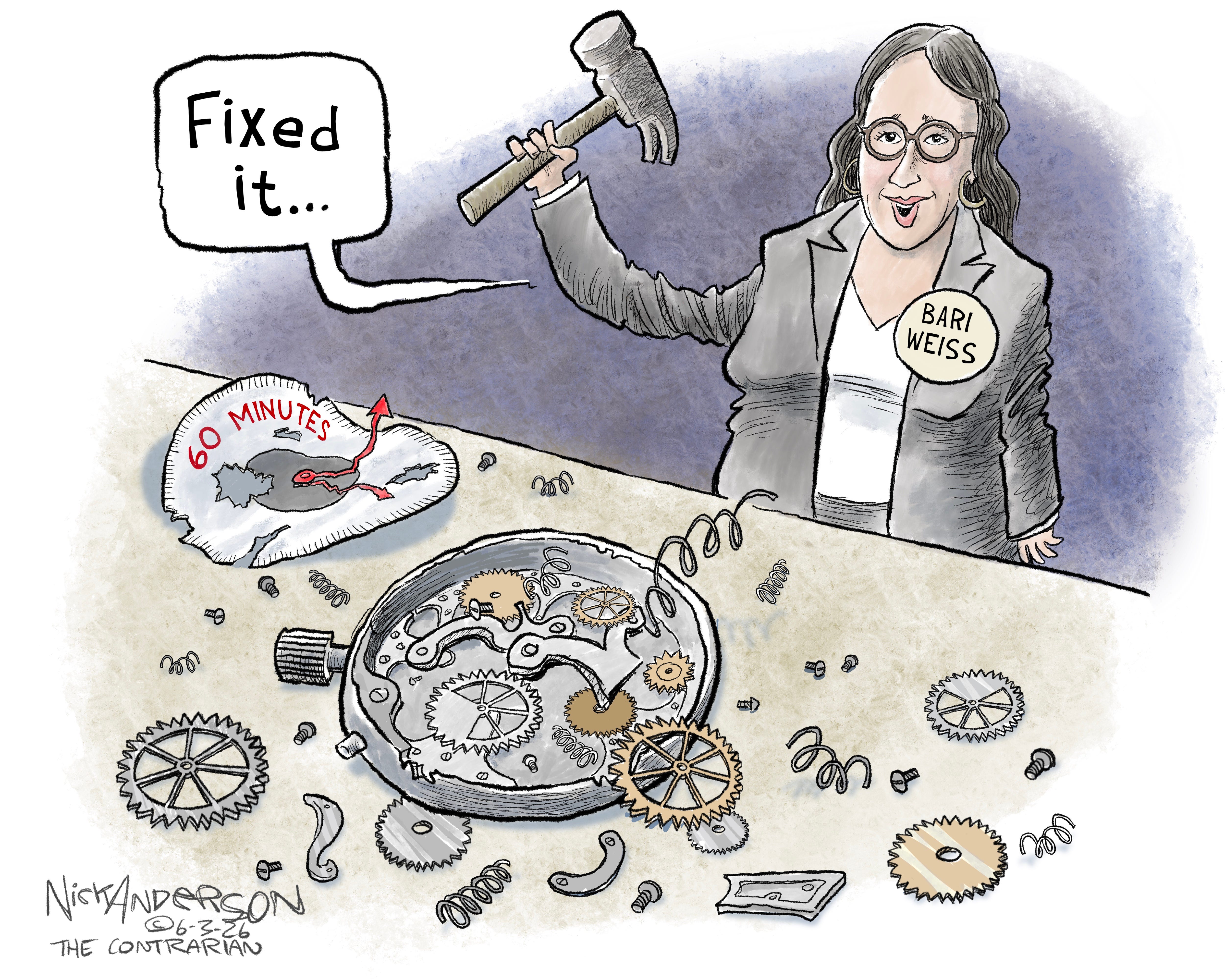
One of the oddities of modern journalism is that reporters are still expected to speak truth to power, just not the power that signs their paychecks. That’s the lesson from Scott Pelley’s firing at 60 Minutes.
According to reports, Pelley confronted new management after a series of firings and upheavals at the iconic broadcast news magazine. He questioned the qualifications of the people being put in charge. He accused Bari Weiss of trying to dismantle the culture and values that made 60 Minutes successful. Within a day, he was gone.
The official explanation is that Pelley behaved inappropriately. Of course it is. When institutions want to get rid of someone, they rarely admit it’s because of what was said. It’s almost always because of the tone in which it was said. The problem is never the criticism. The problem is that the criticism wasn’t sufficiently cheerful.
This isn’t just a story about a legendary correspondent clashing with new management. It’s about a media company trying to win favor from an administration that holds enormous power over its future. Paramount Skydance, run by David Ellison, is seeking approval for a massive Warner Bros. Discovery deal, and Pelley himself accused the company’s new owner of casting aside 60 Minutes “to curry a moment of favor with the Trump administration.”
That context changes everything.
Because suddenly the upheaval at 60 Minutes looks less like a newsroom restructuring and more like tribute paid at the altar of regulatory approval. The problem wasn’t simply that Pelley challenged Bari Weiss or questioned the qualifications of new executive producer Nick Bilton. The problem was that he said the quiet part out loud: that CBS News appears to be sacrificing one of the crown jewels of American journalism to make Trump happy.
And why wouldn’t people suspect that? Pelley was fired after he confronted management over the firings of top producers and correspondents, accused Weiss of “murdering” the program, and said new management had pushed him to include unverified assertions in a politically sensitive story. Reuters also reported that his departure followed a wave of firings and that Pelley criticized the network’s new ownership as politically motivated.
That’s the real scandal here. Trump didn’t need to shut down 60 Minutes. He didn’t need to send armed goons into the newsroom. He didn’t need to revoke anyone’s license on live television. He just needed media executives to understand what he wanted, and to understand what they wanted from him. The rest takes care of itself.
Pelley may have lost his job, but he clarified the stakes. This was not merely a personality conflict. It was a collision between journalism and access-seeking corporate power.
What’s also striking about this episode is how perfectly it captures the larger context of modern media. For years, news executives have treated journalism as a problem to be managed rather than a mission to be protected. The people producing the work become secondary to consultants, strategists, branding experts, audience-development teams, and executives armed with PowerPoint presentations explaining why everything that made the institution successful needs to be changed immediately.
The result is almost always the same. The institution loses its identity. The audience notices. The executives blame the audience. Then they lay off more journalists. Rinse and repeat.
Bari Weiss occupies a particularly fascinating place in this story. Much of her public career has been built on arguing that institutions suppress dissent, punish independent thinkers, and become hostile to uncomfortable viewpoints. She built a following by criticizing organizations that demanded ideological conformity.
Yet when one of the most respected journalists in television challenged her leadership, the response wasn’t debate. It wasn’t persuasion. It wasn’t a public defense of her vision. It was termination. Apparently dissent is a sacred principle right up until someone dissents from you.
What makes Pelley’s firing especially troubling is that nobody disputes the central facts. New management arrived. Veteran staff were fired. Experienced producers were shown the door. Correspondents were dismissed. The newsroom was thrown into chaos. Pelley objected. Then Pelley was fired.
Readers and viewers have seen this movie before. We’ve watched hedge funds hollow out newspapers. We’ve watched local television transformed into corporate content factories. We’ve watched digital outlets burn through talented journalists chasing growth metrics that never materialized.
Now we’re watching one of the most respected brands in broadcast journalism undergo its own corporate makeover. We’re told it’s necessary. We’re always told it’s necessary. Maybe it is.
But when a newsroom starts losing the people who built its reputation, the burden of proof should fall on the people doing the firing, not the people sounding the alarm. Scott Pelley may have lost this fight. But history tends to be kinder to the journalists who defend institutions than to the executives who “restructure” them.
The real question isn’t whether Pelley was too blunt. The real question is why one of the last people in television news willing to speak his mind became the problem, while the people dismantling the institution somehow became the solution.
Pelley may have lost his job, but he also exposed something larger than a personnel dispute. He exposed the growing gulf between journalism and the people increasingly tasked with managing it. One side believes the mission is to pursue truth, challenge power, and defend editorial independence. The other seems increasingly focused on optics, relationships, branding, and staying in the good graces of owners and politicians.
That’s why this story matters. It isn’t really about Scott Pelley. It isn’t even really about Bari Weiss. It’s about whether America’s news organizations still value journalists who ask difficult questions, or only when those questions are directed at somebody else. Pelley asked those questions. Bari Weiss answered them. Not with words, but with a pink slip.
Scott Pelley didn’t fail journalism. Journalism failed Scott Pelley.
For almost 40 years cbs/paramount was the source of my favorite programming and news. I finally stopped all cbs recording and cancelled my paramount subscription. We need to boycott them.
Nice