
MAHA

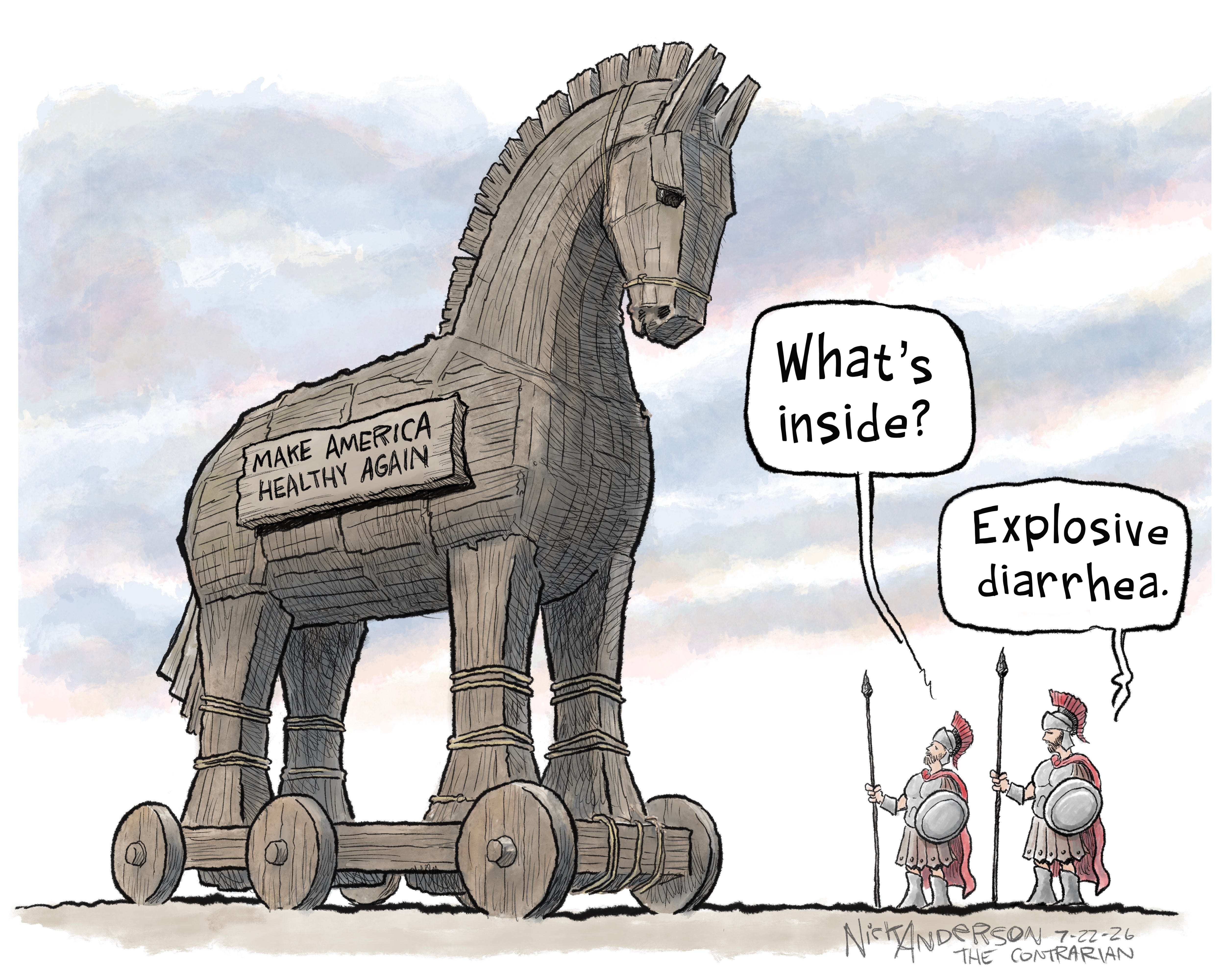
Health officials say they’ve traced a multistate outbreak of cyclosporiasis that has sickened at least 1,600 people to shredded iceberg lettuce served at some Taco Bell restaurants. HHS Secretary Robert F. Kennedy Jr. insists the outbreak is “under control,” while critics question whether recent changes to federal food safety surveillance made it harder to catch the problem sooner. Kennedy says those concerns are overblown because the government is still monitoring outbreaks, but dismantling parts of a smoke alarm system is an odd way to demonstrate your commitment to fire safety. Meanwhile, Americans are left with the comforting knowledge that the lettuce is being recalled, after it already completed its mission.
RFK Jr. argues that investigators identified the likely source, traced the illnesses to shredded iceberg lettuce supplied to some Taco Bell locations, and worked with companies to implement recalls. Although the FDA later determined that one laboratory result was a false positive, the agency says its broader epidemiological evidence still points investigators toward the same supply chain. Federal officials also say surveillance and forensic investigations remain active as they look for additional cases and sources.
Critics, including Sen. Jon Ossoff, argue that recent changes to the CDC’s FoodNet surveillance program have weakened the nation’s ability to detect and respond to outbreaks.
Ossoff pointed out to Kennedy in a recent letter that the CDC ended FoodNet’s mandatory reporting of the parasite that causes cyclosporiasis, part of a broader policy change that made reporting optional for all pathogens except Salmonella and Shiga toxin-producing E. coli beginning July 1, 2025. “Now a cyclosporiasis outbreak sweeps the nation. Your foolish and self-indulgent demolition of critical public health programs puts Americans at risk,” Ossoff wrote.
Dr. Dan Jernigan, former CDC infectious diseases director, told ABC News that FoodNet received “chronically low funding” for a while.
“Whether or not the FoodNet issue from last year is significantly impacting it, it’s a little hard to say…,” Jernigan said about the outbreak.
“This is a big cyclospora outbreak, and it requires a lot of people to be involved. The staffing cuts, the 25 percent at CDC, that doesn’t help when you need to have a big response,” he said, citing DOGE cuts to the president’s malaria initiative and for neglected tropical diseases.
“Those were dollars that would come from USAID over to CDC when they were cut, that had a significant impact on the division of parasitic diseases and malaria, and so that means they don’t have the depth, they don’t have the resources, and they don’t have the surge capability that they would have had if the money for malaria and for neglected tropical diseases were there,” he said.
Reductions in surveillance and staffing make it harder to identify trends early and coordinate responses. Kennedy rejected that criticism, maintaining that FoodNet changes eliminated redundant monitoring rather than core surveillance, and that states and federal agencies continue to conduct epidemiological investigations.
Many public health experts maintain that surveillance systems provide valuable early-warning capabilities and that reducing them could make future outbreaks more difficult to track. Cyclospora outbreaks are inherently difficult to investigate because the parasite has a relatively long incubation period and contaminated fresh produce can move through complex supply chains before illnesses are recognized. Those factors make early detection even more critically important.
Making diarrhea and MAHA partners is the work of a clever/devilish cartoon artist. Thanks Nick!!!
The cruelty here, mixed with apathy and incompetence, cannot and should not be downplayed. I know of someone recovering from this, and it's just brutal.
Sadly, without funding and research, we lose the ability to be forewarned.
Disgraceful.