

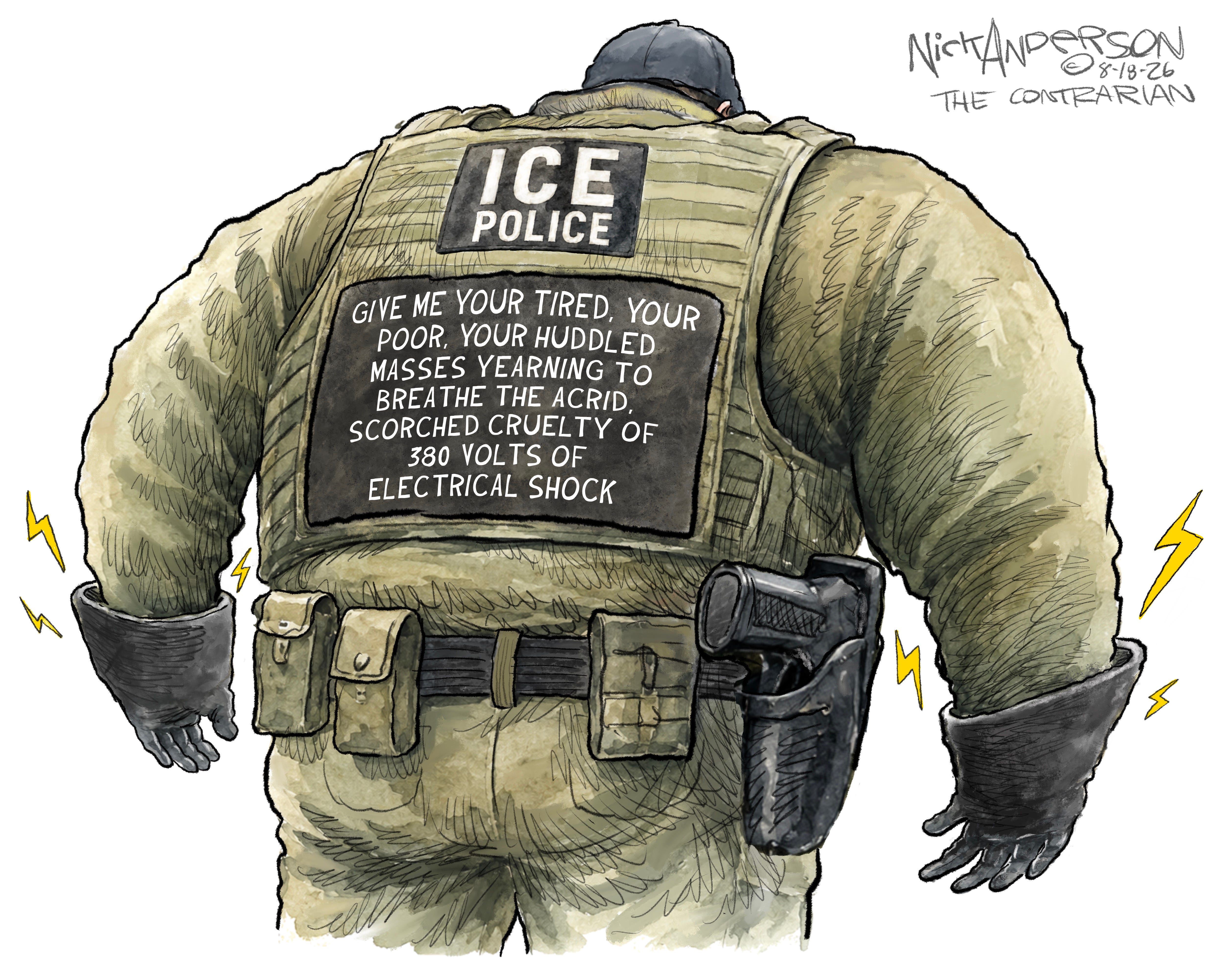
When ICE announced plans to spend up to $20 million on electric shock gloves, the debate initially centered on the technology itself. The devices—called Generated Low Output Voltage Emitters, or G.L.O.V.E.—deliver painful electrical shocks through direct contact and are marketed as “conductive distraction and de-escalation” tools. The Trump administration argues they provide officers with another nonlethal option between verbal commands and more serious uses of force.
The gloves arrive at a moment when ICE is already facing intense scrutiny over its tactics. Amnesty International has described them as “readily misused for torture.” Human Rights Watch argues that introducing a weapon designed to inflict pain, particularly one that can be activated with little outward indication, increases the risk of abuse in an agency that critics say already lacks sufficient transparency and accountability. The organization warns that the technology could make excessive force easier to conceal, and ICE isn’t exactly famous for transparency or accountability these days.
The gloves represent an insidious evolution in law enforcement technology aimed less at visibility than deniability. Unlike Tasers or batons, the gloves resemble ordinary protective equipment until activated, making their use difficult for bystanders to detect. The gloves are marketed as “low optics” use-of-force tool—one that can inflict pain without creating the dramatic images that often drive public scrutiny of police conduct.
In a 2024 promotional video for Compliant Technologies—the manufacturer of the gloves—Adam Glueck, then-assistant chief of the Cape Girardeau Police Department in southeastern Missouri, explained why his officers love the gloves. “If I try to take away the gloves from those officers at this point I think we may have a mutiny on our hands,” Glueck joked. “They’ve grown really attached.”
As Mother Jones magazine pointed out, the shock gloves allow their wearer to inflict pain “without leaving the sort of marks that could look bad to witnesses or leave an officer vulnerable to lawsuits.”
“In today’s society, you know, everybody’s filming everything, everybody has a cell phone,” Glueck said, and it “looks better on camera, and it looks better to those witnesses. With a glove, there are no burn marks or scars.”
Yikes.
The gloves are part of a broader trend of companies developing compliance technologies that promise control without obvious physical evidence. The manufacturer advertises that the gloves generally leave no burns or lasting marks while producing enough pain to gain compliance in seconds. That marketing language, critics argue, highlights a troubling incentive: if a device leaves little visible evidence, allegations of misuse become harder to prove.
Reprehensible and un-American. This is Trump's dystopian dictatorship.
Lawd, if we only could reverse the polarity. Already the highest-funded U.S. law enforcement agency, what's another $20 million to add to the $85 billion they already have? MELT ICE.