
Lesson Learned

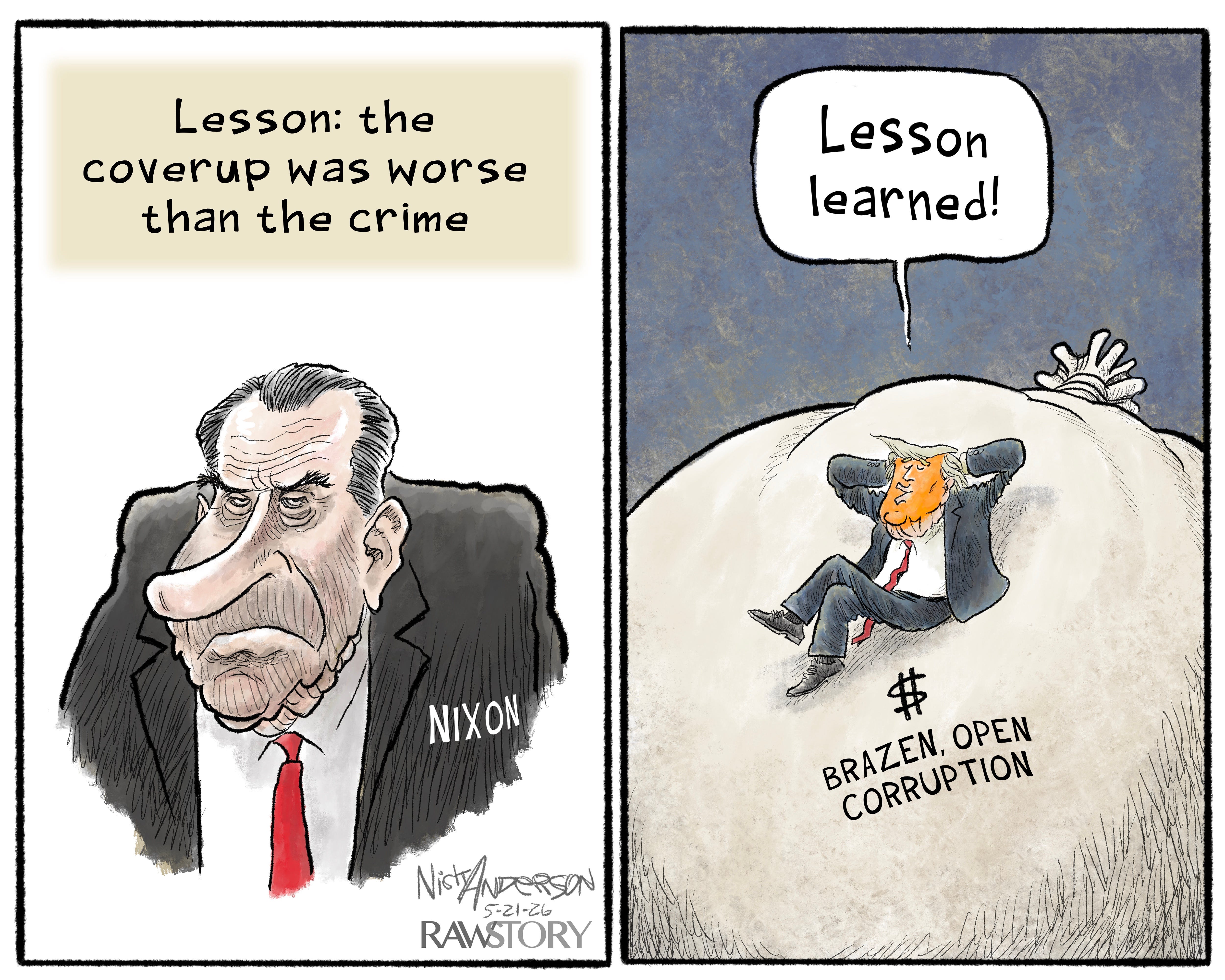
There used to be a time when corruption tried to stay out of sight. Now it comes with a press release. The Trump administration’s latest creation—a $1.8 billion “Anti-Weaponization Fund”—is being sold as a mechanism to compensate victims of government overreach. In reality, it looks more like a taxpayer-funded lottery for political loyalty.
Critics have called it a slush fund. Even some Republicans are uneasy. And for good reason: the rules are vague, oversight is minimal, and the recipients may remain anonymous. Anonymous. In a democracy, using public money.
If you were trying to design a system that maximizes the potential for abuse, you’d be hard-pressed to do better, because this isn’t just about one fund. It’s about a pattern, a governing philosophy that treats public office not as a responsibility, but as an opportunity.
Start with the fund itself. Nearly $2 billion set aside to compensate people who claim they were politically targeted. Who decides who qualifies? Unclear. Based on what standards? Also unclear. Paid how much? Potentially undisclosed. And who might benefit? Allies. Possibly activists. Likely even individuals connected to January 6.
Meanwhile, the administration insists this is about fairness. But fairness doesn’t operate in secrecy. It doesn’t rely on anonymous payouts and undefined criteria. It doesn’t leave even allied lawmakers asking basic questions about how the system works. Fairness requires transparency. Trust is exactly what this kind of arrangement erodes.
Even the far-right Wall Street Journal editorial page denounced it as a “rotten” deal that will enrich his friends, allies, and supporters.
“Could future historians ask for a better emblem of today’s warped political age?” the editorial board wrote.
But the fund doesn’t exist in isolation. It fits neatly into a broader picture. A president executing thousands of stock trades—3600 in the first three months of 2026, or one about every 7 minutes during the trading day—many involving companies directly affected by his own policies. Defense contractors during a war. Chipmakers after export approvals. Major corporations whose executives appear alongside him on official trips.
Legally permissible? In many cases, yes. Ethically defensible? That’s a different question. Because even if decisions are technically delegated to third parties, the reality is unavoidable: the president knows what he owns. And when policy decisions (and Iran War announcements) can move markets, that knowledge matters.
It creates, at minimum, the appearance of a conflict. At worst, it creates something far more serious: a system where public decisions and private gain begin to blur together.
And then there’s the larger ecosystem. Business ventures expanding while in office. Cryptocurrency operations attracting vast sums from largely unknown sources. Regulatory decisions that conveniently benefit those same industries. Investigations that quietly disappear.
Together, these grifts form a pattern, a presidency that doesn’t just tolerate self-enrichment, It normalizes it. That’s what makes this moment different from past controversies. This isn’t hidden. It isn’t subtle. It isn’t even particularly defensive. It’s out in the open.
A fund that may distribute billions with minimal transparency. A financial portfolio actively trading in sectors influenced by policy. A broader network of business interests intersecting with government decisions. And the response isn’t denial. It’s justification.
That may be the most striking shift of all. Because once something no longer needs to be hidden, it has effectively been accepted, at least within the system that allows it to continue. The danger isn’t just the money. It’s the precedent.
A government that creates mechanisms to financially reward its allies. A system where influence, access, and alignment can translate into direct compensation. A political environment where the line between public service and private gain becomes increasingly difficult to see.
That’s not how democratic accountability is supposed to work. Public office isn’t meant to be a profit center. It’s meant to be a trust. And when that trust is replaced with transactions—when governance starts to resemble a series of financial arrangements benefiting those closest to power—the system itself begins to change. Not all at once. Not in a single moment. But gradually, steadily, as each new step pushes the boundary a little further. Until one day, something like a $1.8 billion “Anti-Weaponization Fund” doesn’t even feel shocking anymore. Just… expected.
That’s when the grift stops being an aberration and becomes policy.
An excellent and infuriating discussion of rampant, unabashed crime. Thanks.
And don't forget the agreement that he, his family and businesses won't be audited by the IRS.